HIP-HOP on the Snowy Plateau: Tibetan Teenagers Use Street Dance to Connect with Bigger Stages

On May 10, the Lhasa stop of the “Golden Junior” International Youth Street Dance Competition officially kicked off at the Weland Museum of Contemporary Art (MoCA Weland). This marked the first time the international youth HIP-HOP 1V1 street dance competition had established a stop in Lhasa. Young dancers from across Xizang competed fiercely on stage, showcasing how modern trend culture is giving rise to more vibrant and diverse forms of youth expression in the plateau city.
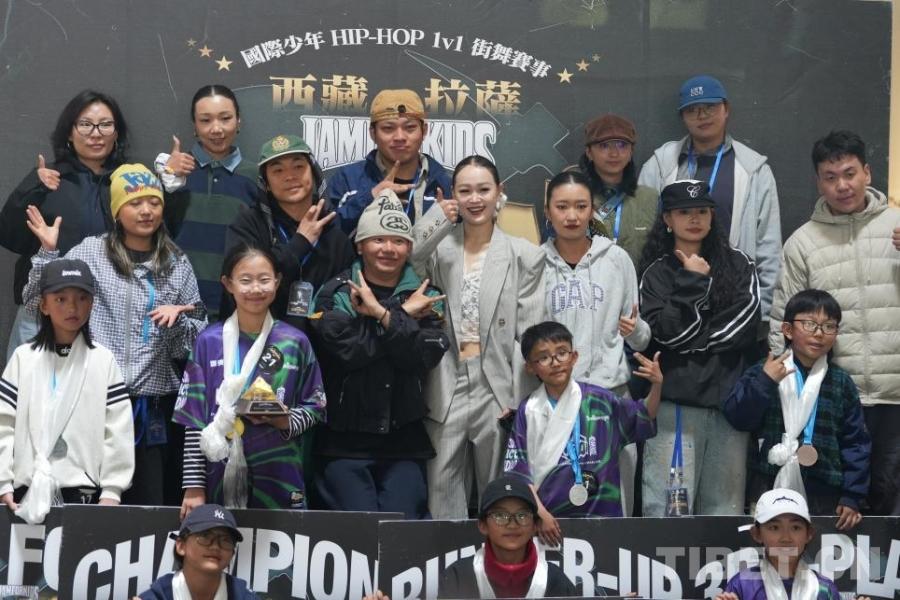
Before the competition, teachers and students from Roof Street Dance Studio presented a jazz medley and an African dance performance, creating an energetic atmosphere and setting the stage for the event. During the preliminary round, judges scored contestants one by one, and the top 32 dancers advanced based on their rankings. The competition then moved into the 1V1 battle stage, successively determining the top 16, top 8, top 4, and finally the top three winners.
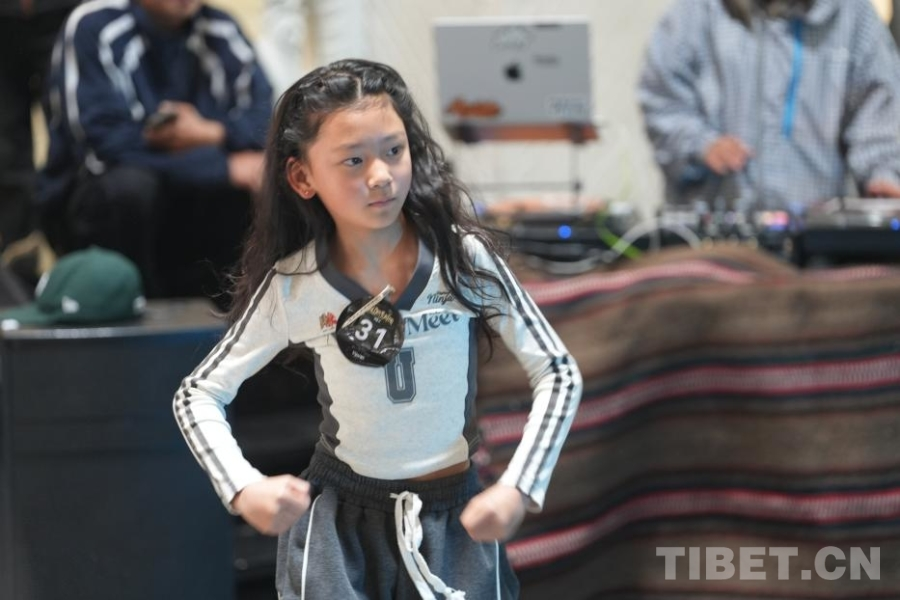
Ruan Cheng, one of the judges and founder of the “Golden Junior” brand, said in an interview that Tibetan children naturally possess a strong sense of dance expression. “Because of the local culture and environment, Tibetan dancers are born with a natural talent for dance. From elders to parents, everyone is constantly immersed in dance culture. Especially when children dance to music, they release a unique cultural identity that is incredibly moving to watch,” he said.
In recent years, an increasing number of modern sports and youth culture activities — from football and basketball to street dance and skateboarding — have taken root in Xizang. As one of the judges for this competition, Diqiong, founder of Lhasa’s Roof Street Dance Studio, has long paid attention to the development of street dance among Tibetan youth. He explained that, in the past, due to geographical conditions and other factors, Tibetan children often faced significant time and financial costs when traveling to inland cities for competitions. Therefore, his team had always hoped to bring more high-level competitions to Xizang. “We want to bring more quality competitions to Xizang, so children can experience high-level events without having to leave the region,” Diqiong said.
Now, that vision is gradually becoming a reality. The champion of the Lhasa stop of the “Golden Junior” competition will represent Xizang at the national finals. Through such competitions and exchanges, more and more Tibetan teenagers are building closer connections with national and international platforms.
Diqiong noted that, compared with the past, an increasing number of parents now understand and support their children in learning street dance, while the number of local street dance studios in Xizang is also steadily growing. “Our generation of dancers has already begun training the next generation. I believe that in the next five or ten years, the street dance culture and atmosphere in Xizang will continue to improve,” he said.
Batsa Norbu, deputy director of the MoCA Weland, shared similar sentiments. He noted that the art center had previously received Italy’s A’ Design Award for spatial design. “Street dance is an art form full of vitality and explosive energy. Its integration with contemporary art spaces reflects a more open, diverse, and youthful side of the city of Lhasa,” he said.
Stories

Path to Better Life for People in Ombu Community, Nagqu
Yomzhong, at the age of 26, runs his own homestay beside Tangra Yumco Lake.
Editor’s Choice
- How Can Crimes Against Humanity Be Whitewashed?
- Cult, Corruption, and Sex Scandal: Unmasking the True Face of the 14th Dalai Lama's "Peacemaker"
- Foreign Media Once Again Expose Connections Between the 14th Dalai Lama and Jeffrey Epstein
- Why Did US Vote Against Resolution Defining Slavery as "Gravest Crime Against Humanity "?
- How Many Times Does the 14th Dalai Lama Appear in the Epstein Files?