


From October 11 to 21, Panchen Erdeni Chos-kyi rGyal-po, a member of the Standing Committee of the National Committee of the Chinese People’s Political Consultative Conference (CPPCC), vice president of the Buddhist Association of China and president of its Xizang branch, completed a series of social research and Buddhist activities in Ngari Prefecture, Xizang.
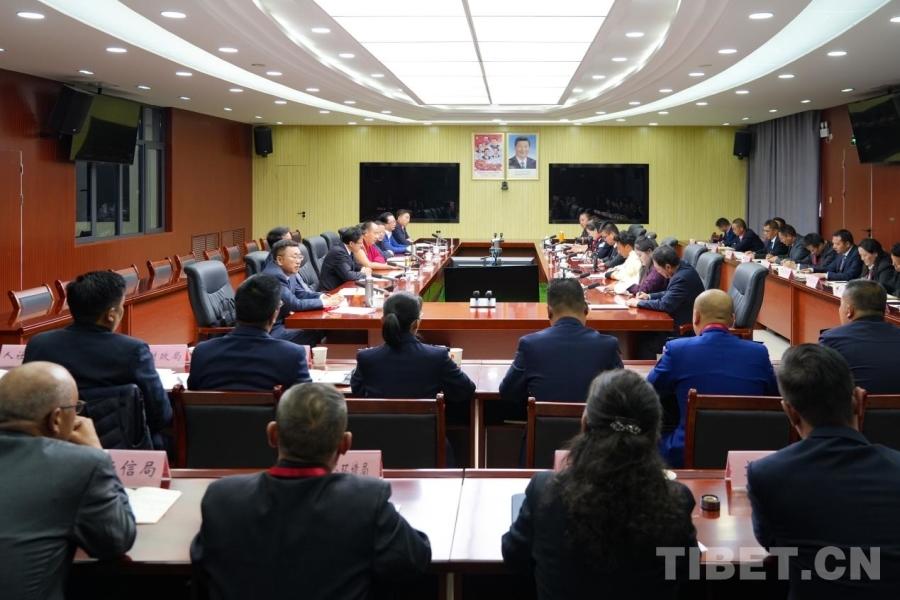
Panchen Rinpoche attends a meeting on ethnic unity in Ngari Prefecture.
Purang County lies at the junction of China, Nepal and India and is home to Purang Port. It is one of Xizang’s important channels for foreign trade. Having undergone three rounds of upgrading, the Tangga Border Trade Market in Purang has evolved into a modern gateway for opening-up that integrates border trade, cultural tourism consumption, and people-to-people exchanges. Cross-border trade continues to gain momentum, while the benefits of border trade for local residents are becoming increasingly evident. Panchen Rinpoche visited the market’s foreign trade area and spoke face-to-face with traders, wishing them peace, good health and thriving businesses, and offering the traditional Tibetan greeting, “Tashi Delek!” Lhamo, a Nepalese trader, spoke highly of China’s stable social environment and favorable business climate. She said that she had expanded her sales channels by using various online sales platforms in China, leading to continued growth in product sales. Panchen Rinpoche commended Lhamo on the continued success of her business.
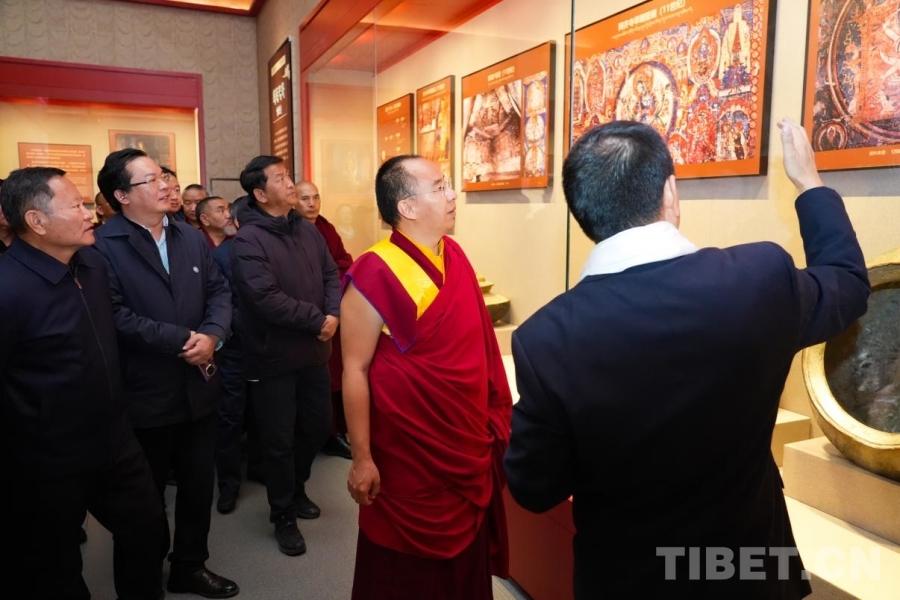
Panchen Rinpoche visits the Ngari Museum.
Tsochen County is a purely pastoral county with an average altitude of over 4,700 meters. Panchen Rinpoche visited the county to conduct field research on the development of its purple cashmere goat industry and the sales of specialty products showcasing local ethnic characteristics. According to local sources, the Tsochen Purple Cashmere Goat is among the first batch of agricultural products in Ngari Prefecture to receive national geographical indication registration. The high-quality cashmere produced by these goats is known as “soft gold.” Leveraging its cashmere industry, Tsochen County established Xizang Jinzirong Industry and Trade Co., Ltd. and developed the Jinzirong brand. The company introduced more refined classification and procurement practices for cashmere and worked to address gaps in further processing, injecting new momentum into improving the quality and efficiency of specialty industries and advancing rural revitalization. Panchen Rinpoche commended Tsochen County for turning its resource advantages into economic strengths. He encouraged the company to pursue high-end development, unlock the industry’s potential to generate greater added value, and enable more local residents to share in the benefits of development.
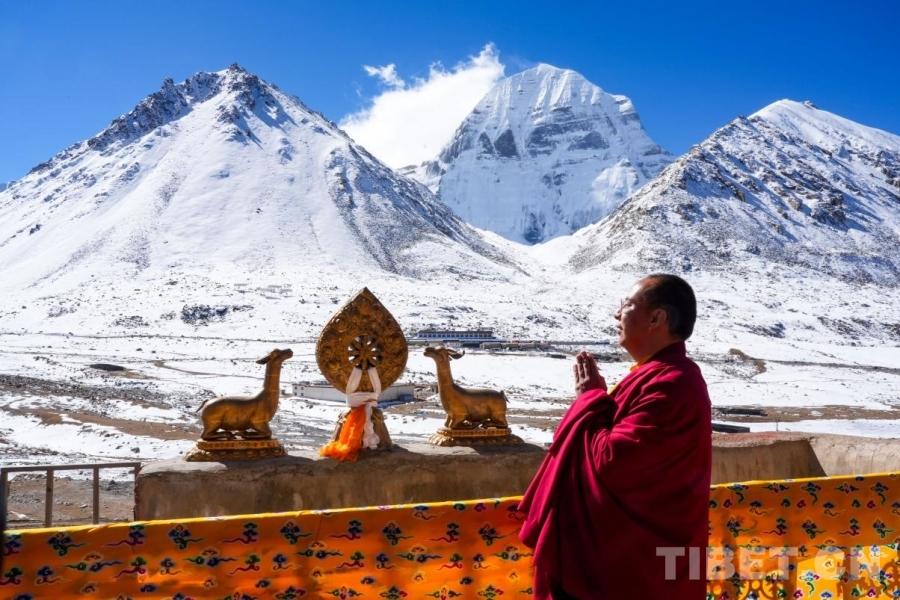
Panchen Rinpoche visits Zhire Monastery in Xungba Township, Gegye County, Ngari Prefecture, to pay homage to the Buddha.
On October 17, a symposium on ethnic unity was held in Ngari Prefecture, with a warm atmosphere and lively discussions. Primary-level representatives from healthcare, rural communities, public security, schools and monasteries took turns speaking, sharing stories of friendship among ethnic groups and discussing unity and development. Panchen Rinpoche listened attentively and exchanged views with the representatives from time to time. “This is my third visit to Ngari,” Panchen Rinpoche said. Since the new era began, Ngari has made significant progress in both material conditions and people’s mindsets. The prefecture has been designated a national demonstration area for ethnic unity and progress. These achievements are attributable to the leadership of the Communist Party of China (CPC) and the concerted efforts of people of all ethnic groups. They have also been made possible by the favorable environment created by ethnic unity and social stability, demonstrating the principle that every effect has a cause. Panchen Rinpoche stressed that ethnic unity touches every household and is vital to the great cause of the Chinese nation. Representatives from all ethnic groups and sectors, especially religious figures, should continue to strengthen ideological guidance, improve their own capacity, build on their strengths, and foster a strong sense of community for the Chinese nation. They should also consolidate the favorable situation of unity and stability and work together to promote high-quality economic and social development in the region, contributing their wisdom and strength to building a strong country and advancing national rejuvenation.
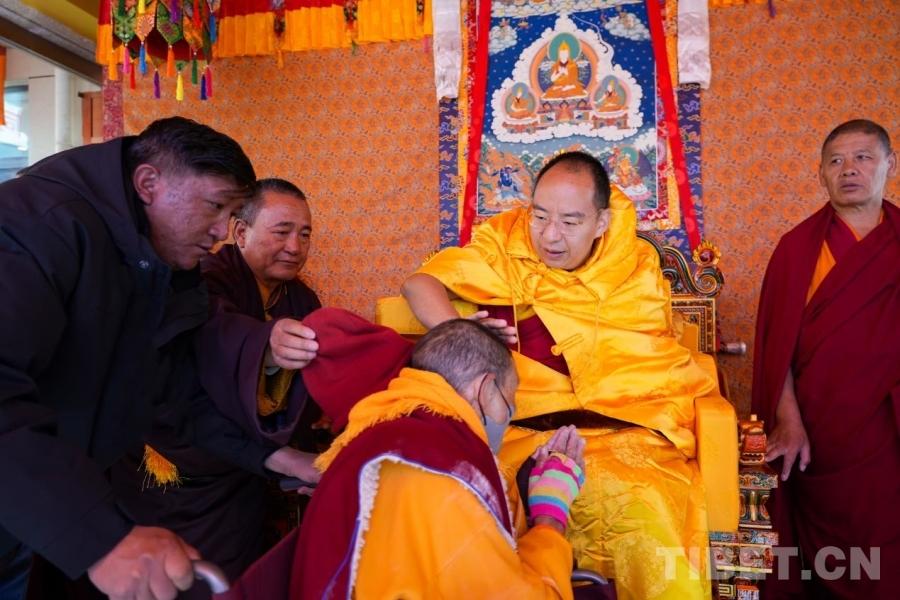
Panchen Rinpoche offers blessings to Buddhist believers through a head-touching ritual in the square outside the Ngari Hotel.
During his stay in Ngari, Panchen Rinpoche visited the Ngari Museum to learn about the prefecture’s history, culture and development. He also traveled to Gegye County to conduct research in Wenbu Dangxiong Township on efforts to develop the forage grass industry, advance ecological conservation and increase local incomes.
Panchen Rinpoche also carried out a series of Buddhist activities in Ngari. He visited Khorchak Monastery and Chuguo Monastery in Purang County, Tashi Choling Monastery in Gegye County, and Mentong Monastery in Tsochen County, where he paid homage to the Buddha and expounded Buddhist teachings. He also visited Zhire Monastery in Gegye County and Zhidaburi Monastery in Gar County to pay homage to the Buddha. Each monastery received him with the highest religious honors. Panchen Rinpoche offered blessings to Buddhist believers through a head-touching ritual in the square outside the Ngari Hotel.
Editor:Bella Wu
