


On August 14, a symposium was held in Lhasa for representatives of non-CPC individuals in Xizang to study, publicize and implement the Ethnic Unity and Progress Promotion Law. Panchen Erdeni Chos-kyi rGyal-po, a member of the Standing Committee of the National Committee of the Chinese People's Political Consultative Conference, vice president of the Buddhist Association of China and president of the Xizang branch of the Buddhist Association of China, attended the symposium and delivered remarks.
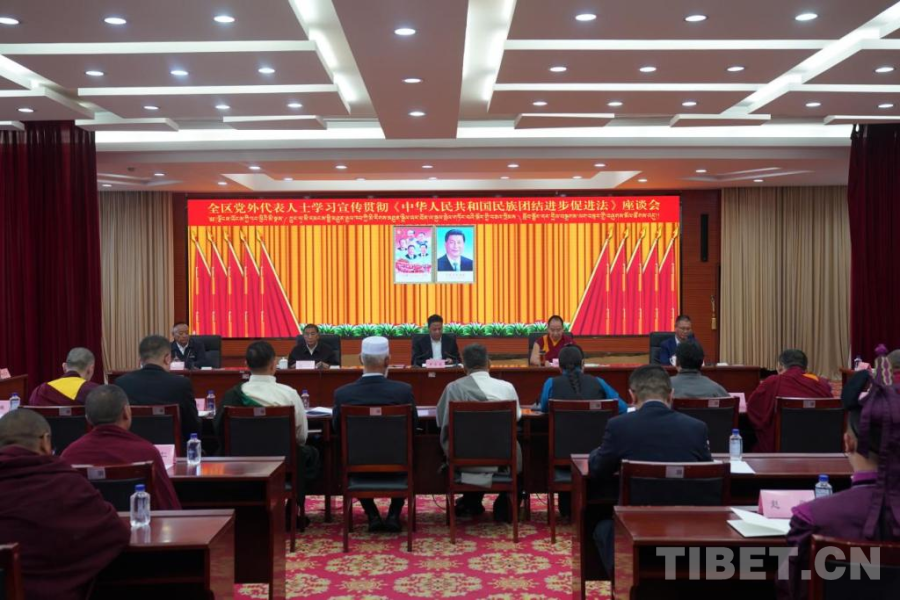
Panchen Rinpoche said in his remarks that ethnic unity is the foundation of national unity, the cornerstone of social harmony, and the source of development and progress. As China’s first foundational and comprehensive law dedicated specifically to promoting ethnic solidarity and progress, the Ethnic Unity and Progress Promotion Law responds to the missions and tasks of ethnic affairs work in the new era, providing a strong legal framework for its high-quality development. It offers robust institutional safeguards for strengthening the sense of community for the Chinese nation and consolidating the foundations of ethnic unity, and serves as a fundamental measure to consolidate and advance the cause of ethnic unity and progress in the new era.
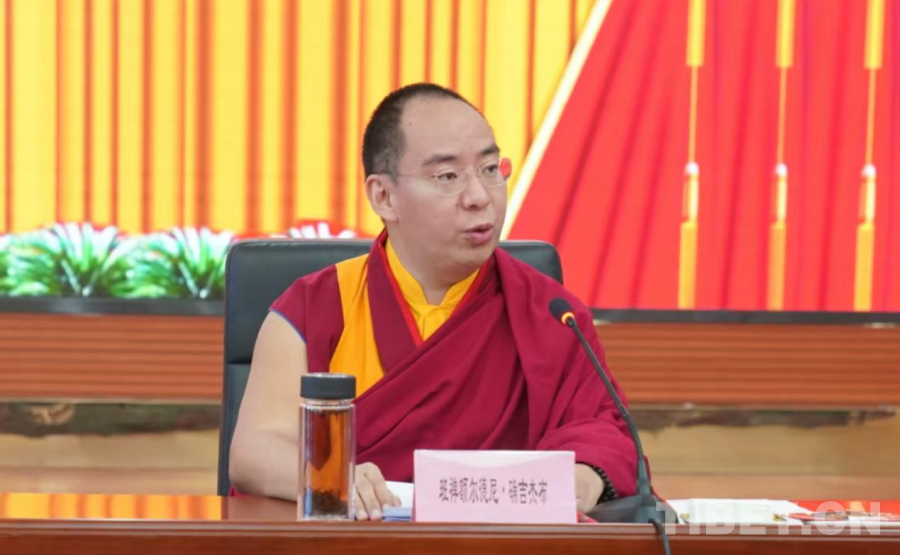
Panchen Rinpoche said that the Ethnic Unity and Progress Promotion Law is a powerful instrument of national law and also an embodiment of the true Dharma on which religious precepts should be based. National law takes precedence over religious precepts, and believing in the true Dharma must begin with observing discipline and the law. He said he would devote himself to studying the essence of the law, embrace its spirit, follow the principles of upholding the law, and guide monks, nuns and followers in Tibetan Buddhism to understand that the law is a strong legal safeguard protecting their lawful rights and interests and an important standard for handling ethnic affairs in the new era.
The Ethnic Unity and Progress Promotion Law emphasizes building a shared spiritual home for the Chinese nation, which is highly consistent with the fine Buddhist tradition of solemnizing the land and bringing benefit and happiness to all sentient beings. The vast land of China is the homeland where all ethnic groups have lived, interacted and flourished together; its splendid civilization is a treasure shaped by the wisdom and dedication of generations of sages. Since Buddhism was introduced to China, it has become deeply integrated into Chinese culture. Its teachings of compassion, benefiting the world and pursuing balance and harmony have become an integral part of the fine traditional Chinese culture.
Building a shared spiritual home depends above all on a shared cultural identity, with patriotism as its foundation. The motherland is the place where we are born, raised and nurtured, and to which our deepest emotions belong. Loving the country and loving one’s religion has never been an empty slogan; it is a responsibility that every Buddhist disciple should fulfill. According to the Nirvana Sutra, “Through the protection of the ruler, the country enjoys peace and prosperity, and the people flourish; therefore, all those who have left secular life long to dwell in such a land.” The 10th Panchen Erdeni once taught, “All religious activities must take patriotism as their prerequisite.” To “keep the fundamental interests of the country in mind” means embracing the shared symbols and image of China and repaying the great kindness of the Communist Party of China and the land that has nurtured us. Only by loving and serving the country can we fulfill the Buddhist aspiration for a prosperous and peaceful age.
Panchen Rinpoche said that history has repeatedly shown that mutual understanding, respect, tolerance and appreciation among ethnic groups are the lifeblood of national unity and ethnic solidarity. Religious communities should therefore serve as a bond that promotes exchanges, interaction and integration among all ethnic groups. In the new era, those who observe religious precepts should take “safeguarding ethnic unity” as a solemn personal responsibility and put the principle of unity of “body, speech and mind” into practice from the depths of their hearts. Today, if monks, nuns and Buddhist followers study and understand the Ethnic Unity and Progress Promotion Law in accordance with its principles, set aside prejudice and division, reach a common understanding and firmly develop a law-based mindset, the law can better fulfill its purpose and bring greater benefits to all.
Panchen Rinpoche said that religious figures occupy a unique position that enables them to connect with the broader community of religious believers. Under the guidance of the CPC and the government, we will lead by example and actively create opportunities and platforms for exchanges, interaction and integration among all ethnic groups through religious activities, cultural exchanges, public welfare and charitable initiatives, and other areas. We should guide monks, nuns and Buddhist followers to respect, study, observe and apply the law, use compassion to bridge divides and good deeds to strengthen bonds of friendship, and turn what they have learned into concrete action, using the rule of law as a foundation for building up the strength of ethnic unity. We will actively participate in public welfare and charitable initiatives and contribute to efforts to help those in need, protect the environment and advance rural revitalization. We will actively respond to the national call and guide religious believers to devote their main efforts to developing production, improving their lives and building better lives through hard work. In doing so, we will help create a harmonious and stable environment for high-quality development in Xizang, so that people of all ethnic groups in Xizang can share the fruits of prosperity and development achieved through common efforts and unity.
Panchen Rinpoche said that we must remain firm and unwavering in safeguarding national unity and clearly oppose separatism. When the country prospers, the Dharma prospers. The Tibetan Buddhist community should regard the implementation of the Ethnic Unity and Progress Promotion Law as an opportunity in keeping with Buddhist principles and the needs of the times, and repay the kindness of the country through concrete action. “I will take this law as a guiding light and contribute the wisdom and strength that the religious community can offer to the development of a modern socialist Xizang and the great cause of the rejuvenation of the Chinese nation,” he said.
