


Recently, the Indian media outlet EastMojo published an article titled “The Dalai Lama’s succession: Why China and the US are both invested”, revealing that the United States is actively planning to interfere in the reincarnation of the Dalai Lama: “As the 14th Dalai Lama nears the end of his life, the centuries-old Tibetan system of reincarnation has become a geopolitical fault line between Beijing and Washington. The succession of the 14th Dalai Lama is shaping up to be one of the most consequential religious and political disputes of the 21st century. At stake is not just the future of Tibetan Buddhism, but control over a centuries-old system of reincarnation that has governed authority in Tibet for nearly 800 years.” The article also states: “For the United States and its regional partners, a Dalai Lama recognised outside Chinese control would...serve as a counterweight to Beijing’s expanding influence across the Himalayas. The strategic logic was clear: in Vajrayana Buddhism, a Tulku’s authority extends beyond religion and carries deep social and political influence.”
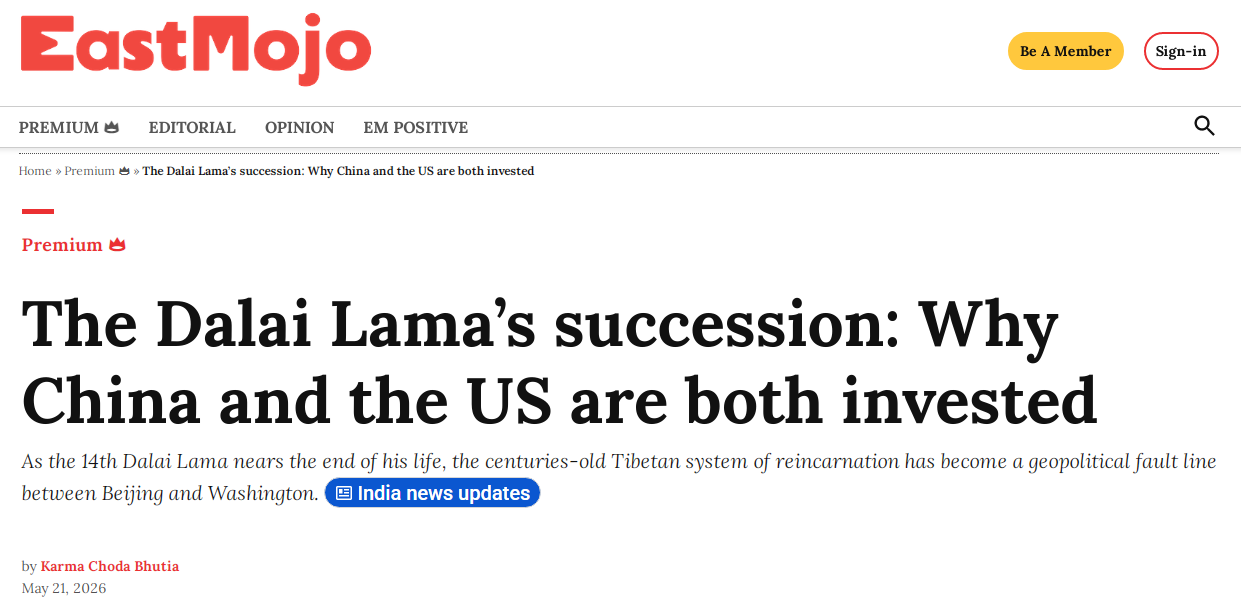
EastMojo article on the Reincarnation of the Dalai Lama.

The 14th Dalai Lama’s secretary and a member of the “Chushi Gangdruk” armed group, which received long-term funding from the U.S. Central Intelligence Agency. Source: Phoenix News
According to the article: “The United States has been involved in Tibetan affairs since the 1950s. Declassified records show that after the Dalai Lama fled to India in 1959, the CIA supported Tibetan resistance groups through covert programmes such as Operation ST CIRCUS and the Mustang guerrilla movement. That involvement continues today in a different form. The Tibetan Policy and Support Act of 2020 authorises sanctions against Chinese officials who interfere in the Dalai Lama’s succession process. Section 6 of the Act frames the matter as an issue of religious freedom and human rights. Washington’s position is that the recognition of the Dalai Lama’s reincarnation is a religious matter to be decided solely by Tibetan Buddhist traditions and institutions, not by the Chinese state.”
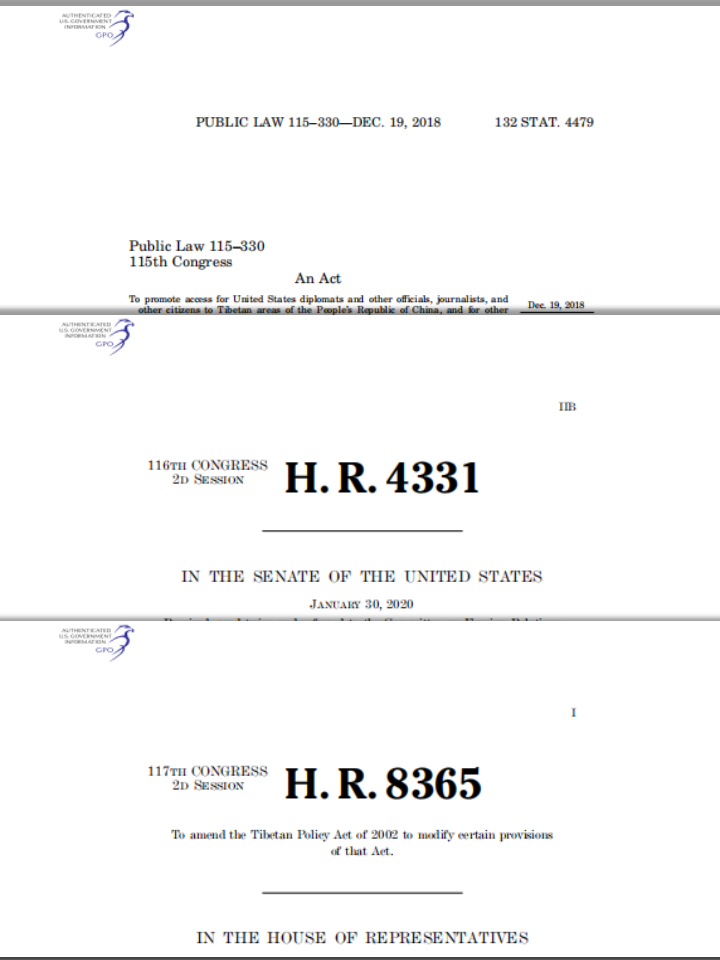
The U.S. Reciprocal Access to Tibet Act of 2018, Tibetan Policy and Support Act of 2020, and Promoting a Resolution to the Tibet-China Dispute Act of 2024.
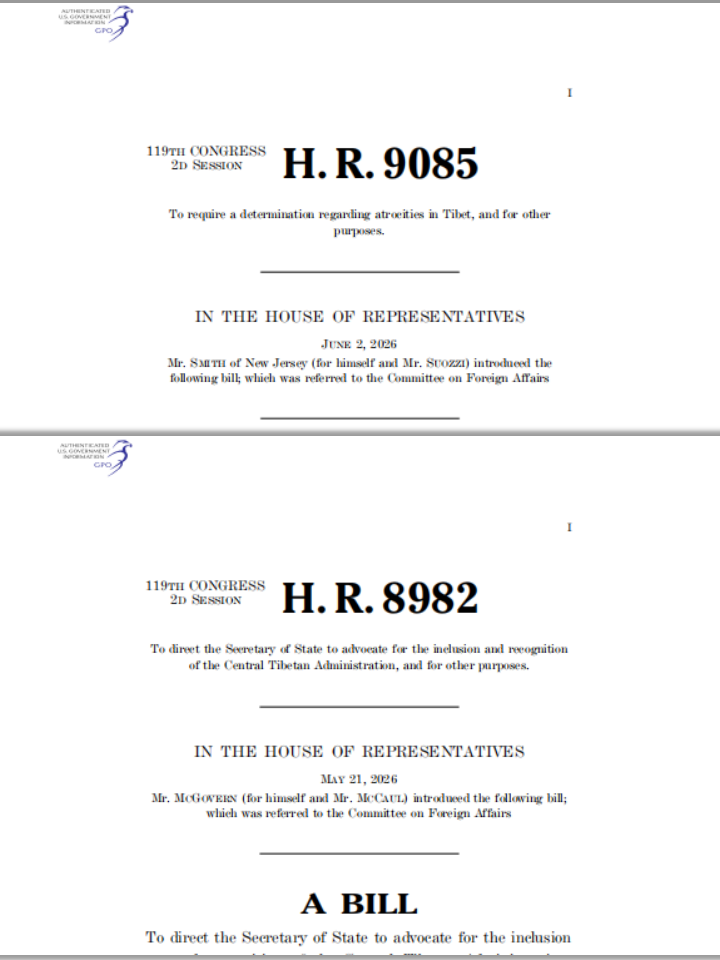
Proposed U.S. legislation including the Tibet Atrocities Determination Act and Assuring the Future of Tibet Act of 2026.
Since 2018, the United States has successively enacted legislation such as the Reciprocal Access to Tibet Act and the Tibetan Policy and Support Act, while more recently proposing bills including the Assuring the Future of Tibet Act. Taken together, these initiatives inevitably raise the question: why is the United States so eager to extend its reach into China’s governance of Xizang?
Washington frequently says one thing while doing another. On one hand, it accuses the Chinese government of “interfering with religious freedom”; on the other, it openly inserts itself into China’s internal religious affairs through legislation, executive measures, and public opinion campaigns. It portrays itself as a defender of human rights while disregarding the long-standing historical conventions governing the reincarnation of Living Buddhas in Tibetan Buddhism, deliberately seeking to politicize and complicate the reincarnation of the 14th Dalai Lama. Such double standards expose the geopolitical calculations and ulterior motives concealed beneath its rhetoric of “protecting religious freedom”, namely, its attempt to undermine China’s stability under the guise of defending human rights.
India, meanwhile, has long been a case of the thief crying “thief”. It has for years tolerated the so-called Tibetan government-in-exile and played a questionable role in matters concerning the reincarnation of the 14th Dalai Lama. Indian media outlets have repeatedly sensationalized the issue of the Dalai Lama’s reincarnation, while certain politicians and scholars with ulterior motives have made inflammatory remarks, claiming that the Dalai Lama’s reincarnation has nothing to do with politics, but is purely a matter of religious faith, accusing the Chinese government of “unreasonable interference”, and even insisting that the Indian government must not allow the next Dalai Lama to “fall into China’s hands”.
Such rhetoric seeks to drive a wedge between China and the United States in an attempt to extract geopolitical gains from their strategic competition. This interference in China’s internal affairs does nothing to foster regional mutual trust. At the same time, whenever frictions arise in China-U.S. relations, India has repeatedly sought to fan the flames, attempting to gain short-term advantages by exacerbating friction between major powers. Such an opportunistic strategy and profit-seeking mentality are plain for all to see.
Matters concerning the reincarnation of the Dalai Lama are entirely China’s internal affairs. Any purported “concern” expressed by external forces constitutes an unlawful interference in China’s sovereignty and internal affairs, demonstrates a lack of respect for the succession system of Tibetan Buddhism, and disregards the sentiments of Tibetan Buddhist followers.
Dawa Tsering, dean of the Samye Monastery Branch of the Xizang Buddhist Academy, stated: “History has long demonstrated that the principles of domestic search and identification, the drawing of lots from the Golden Urn, and approval by the central government constitute the long-standing historical conventions governing the reincarnation of major Living Buddhas. This tradition not only preserves the authentic essence and purity of the Buddhist teachings, but also safeguards the fundamental interests of the faithful.”
The reincarnation of Living Buddhas is a distinctive succession system within Tibetan Buddhism. Through centuries of historical development, it has evolved into a well-established institutional practice governed by rigorous historical conventions and religious rituals. The Chinese government has consistently respected and, in accordance with the law, protected both the freedom of religious belief in Tibetan Buddhism and its traditional succession system.
India and the United States should refrain from extending their interference into China’s Xizang. Attempts to manipulate the issue for political purposes will ultimately prove counterproductive. Xizang continues to prosper and develop as an integral part of China, while the wheels of history roll steadily forward. Any attempt by external forces to obstruct this course is no more than a futile gesture, destined to fail. (Text by Yugyel)
