


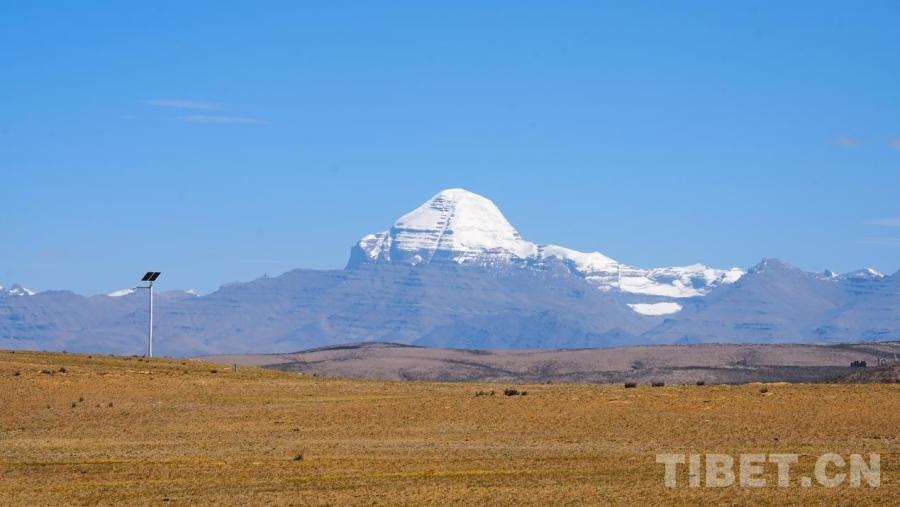
The first thing that greets you when you arrive in Ngari, Xizang, is not the snow-capped mountains, but the wind. Carrying the chill of altitudes of 4,000 to 5,000 meters, it slips through your collar, while the thin, crisp air reminds you of the plateau with every breath. Then, as you look up, Mount Gang Rinpoche comes into view.
Yet as you continue along the scenic trail, your attention gradually shifts from the majestic snow-covered peak to the smaller details along the way: sturdy metal waste bins weighed down with stones against the wind, long-handled litter pickers polished smooth by constant use in the hands of park rangers, and reusable garbage bags that grow heavier with each step taken by visitors...As a core part of the ecological security barrier of the Qinghai-Xizang Plateau, Ngari's fragile ecosystem is woven into every patch of permafrost and every stretch of rocky terrain. Protecting the environment along a high-altitude hiking route therefore involves far more than simply adding a few more facilities. It requires an integrated system designed for extreme conditions, the daily commitment of local caretakers who know every mountain trail by heart, and a shared understanding gradually built between visitors from near and far and this remarkable landscape.
Metal Waste Bins Standing Firm in the Wind: The First Line of Stewardship Along the Trail
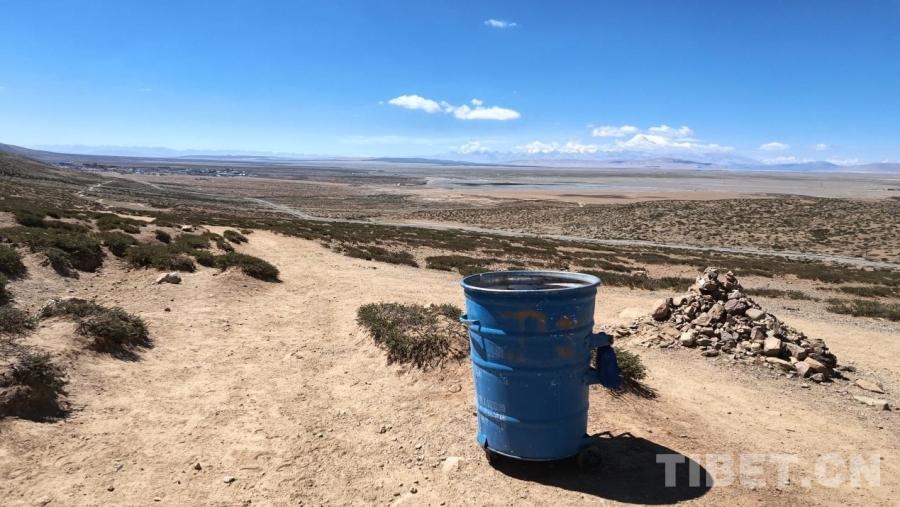
The waste bins along the route are instantly recognizable.
Unlike the brightly colored plastic recycling bins commonly seen in lowland scenic areas, these are cylindrical bins made of heavy-gauge cold-rolled steel. Years of wind and blowing sand have dulled their surfaces to a muted finish, while sun and rain have left faint traces of rust along their edges. At exposed, windswept sections of the trail, large rocks are placed against the bins to keep them from being blown over. In shaded areas, the bins are mounted on stone bases about half a foot high to keep them above melt water during the spring and summer thaw. Most are positioned at open bends along the hiking trail, where visitors naturally come upon them without having to look for them.
To meet the needs of the tourism season in 2026, 122 waste bins have been installed along the scenic route. Together with additional collection points in nearby villages, they form a well-planned waste collection network across the area.
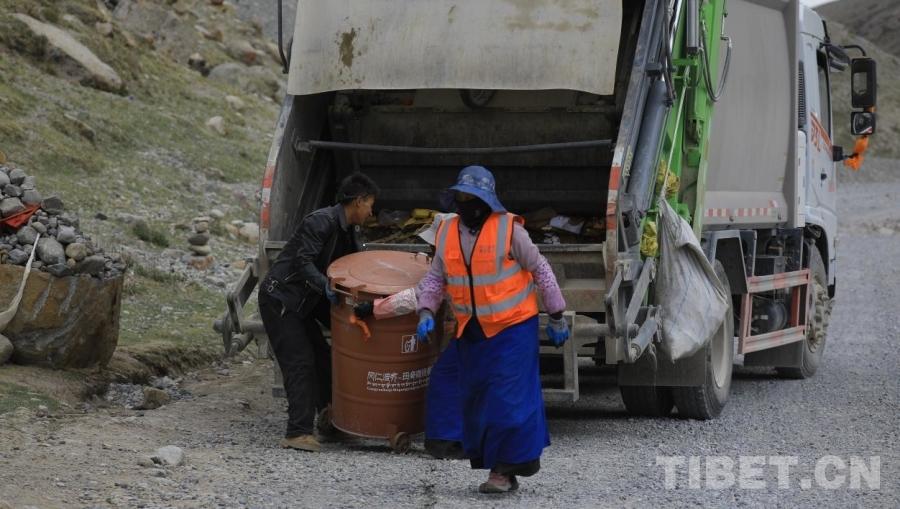
A plastic bottle casually dropped into one of these bins by a visitor is only beginning its journey out of the mountains.
On high-altitude sections beyond the reach of vehicles, waste is first gathered by sanitation workers, then transported by pack horses to transfer stations at lower elevations before being hauled by garbage trucks to a treatment facility more than 100 kilometers away for harmless incineration. Scattered across the mountains, these steel bins serve as the first, and perhaps most essential, link in the entire waste management chain.
To reduce environmental pressure at the source, the local authorities introduced an innovative "Waste Bank" program as early as 2017, establishing four exchange stations along the scenic route.
In 2026, the program was further expanded to meet growing demand. The number of exchange stations increased from four to sixteen, including fifteen supply stations along the trail and one centralized redemption station. Visitors can collect biodegradable garbage bags free of charge at any supply station. The waste they gather is weighed and converted into reward points, with one point awarded for every kilogram collected. At the redemption station near the end of the route, the points can be exchanged for small souvenirs such as keychains, commemorative badges, and towels. Most of these supply stations are managed part-time by local villagers who run teahouses or small shops along the route. While looking after their own businesses, they also serve as the primary-level link in the area's waste collection network, closest to the mountain trails.
These modest incentives may not be substantial, but they are like seeds planted in the soil. Over time, they have helped transform the simple message of "Take Your Trash With You" from a slogan on a signboard into a habit that most visitors practice voluntarily.
Those Who Patrol the Mountains Make Stewardship Part of Everyday Life
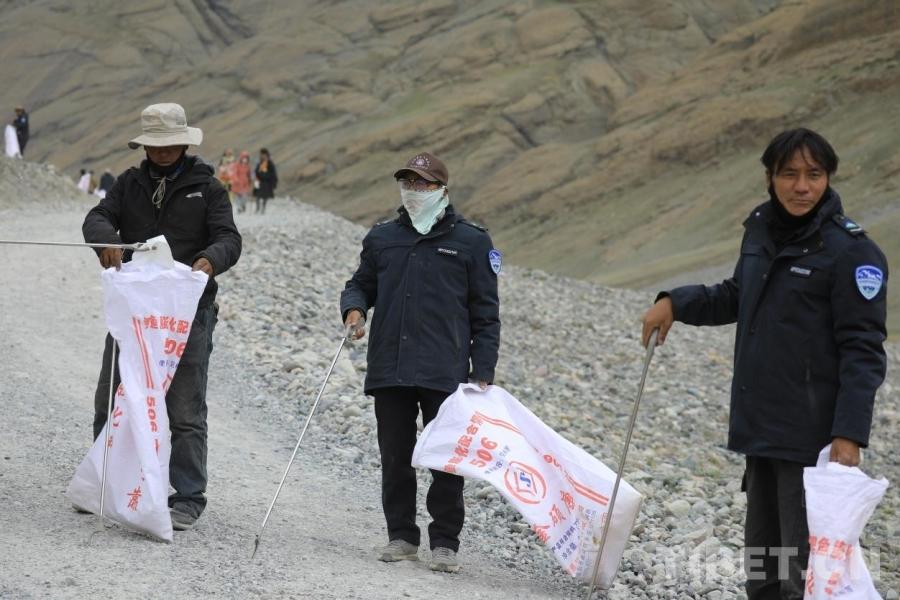
As you continue along the trail, you will often encounter ecological rangers dressed in black uniforms. Some carry binoculars slung over their shoulders, while others hold long-handled litter pickers. Every few steps, they pause to scan the distant slopes for signs of wildlife, then lower their gaze to retrieve plastic wrappers wedged between rocks.
By definition, their primary responsibilities are to patrol the grasslands, monitor wildlife, and identify potential risks such as wildfires and poaching, helping safeguard the integrity and stability of the plateau's fragile ecosystem. Along the hiking routes in the scenic area, however, litter collection has become a natural part of their daily patrols. Wherever they go, they pick up whatever waste they encounter.
Most members of this patrol team are local herders born and raised in the area. Through Xizang's public-interest ecological ranger program, they have transitioned from traditional users of the grasslands, who once followed seasonal pastures with their livestock, into ecological stewards receiving stable government subsidies. On the very mountains and grasslands they have known since childhood, they now protect their homeland in the way they know best. In addition to full-time ecological rangers, the local authorities have brought together sanitation workers, water resource conservation personnel, and village-, township-, and county-level river and lake chiefs to jointly build a comprehensive ecological protection network across this high-altitude region.
The rangers are always on the move, often covering dozens of kilometers of mountain trails in a single day's patrol.
Those Who Come Leave Only Respect Beneath the Snow-Capped Peaks
Perhaps the most encouraging change is the quiet transformation taking place among visitors themselves.
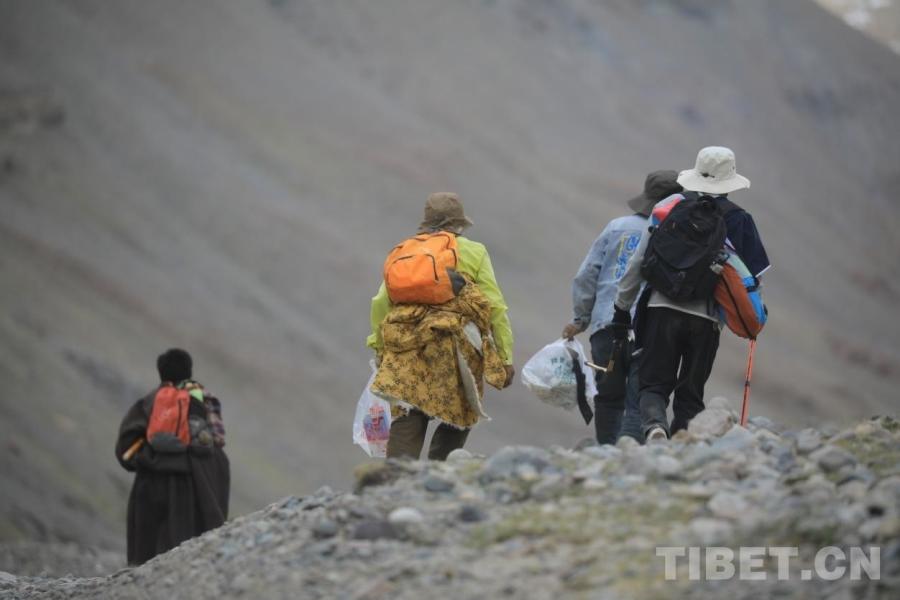
Along the trail, it is common to see hikers carrying their own garbage bags. They pack away their empty water bottles and food wrappers, and if they spot discarded tissues or plastic packaging along the way, they often stop to pick them up as well. Some families turn the journey into a hands-on lesson in environmental stewardship, encouraging their children to toss the litter they have collected into the nearest waste bin. Travelers with cameras often, during a brief rest, casually gather the scattered rubbish around the bins and neatly arrange it before continuing on their way. Many others simply keep their own waste in small bags they carry with them, holding onto it until they reach the next steel waste bin.
There are no loudspeakers constantly repeating reminders, nor are staff members stopping visitors one by one. Yet leaving no trash behind in the mountains has gradually become an unspoken understanding shared by those who come here.
People travel from near and far for the same encounter with the snow-capped peaks, and in doing so, they quietly embrace the same commitment: to preserve this land in its purest state. From the basic commitment of "I will not litter" to the conscious action of "I will help pick it up," this transformation has never been driven by rigid rules or restrictions. Rather, it comes from a shared appreciation for this plateau among all who set foot here.
A management system adapted to extreme environments, a team of rangers rooted in the mountains, and every visitor who willingly bends down to pick up waste. Together, these three forces have created a vivid example of ecological co-governance in a high-altitude region.
Many people travel to Mount Gang Rinpoche in search of awe-inspiring views beneath the snow-capped peaks, or perhaps for answers of their own. Yet few speak of another equally moving part of this encounter: the mountains welcome visitors with their purity, and people respond with restraint and respect. The steel bins standing firm in the wind, the litter pickers worn smooth through use, and the figures bending down along the trail are all tangible guardians of this land's pristine beauty.
And everyone who steps onto this land naturally and willingly becomes a guardian of these mountains.
Editor:Bella Wu
