


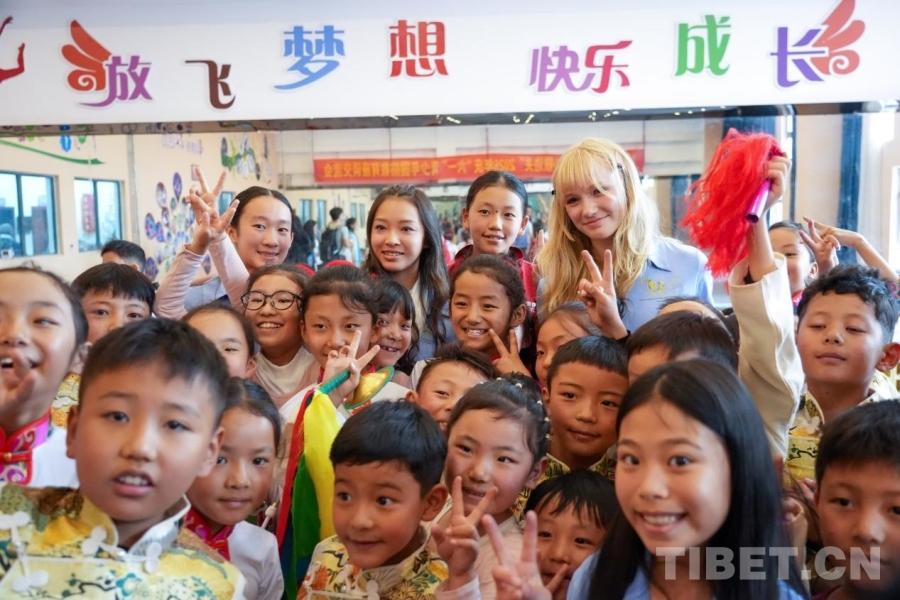
“We’re doing the same thing, using dance to express our respective cultures,” said Chloe, a student at the Oregon Rhythmic Gymnastics & Dance Academy in the United States, after interacting with young people from Xizang in southwest China.
In the height of summer, the Xizang Youth Palace welcomed a group of guests from afar, the teachers and students from the Oregon Rhythmic Gymnastics & Dance Academy.
At the youth-themed exhibition hall inside the Youth Palace, young student guides vividly introduced a series of historical photographs, offering a vivid picture of Xizang’s development and the exchanges, interactions and integration among different ethnic groups. The American teachers and students walked slowly through the exhibition, stopping from time to time to take photos. “I didn’t know much about the place before, but here I’ve seen how rich and diverse the culture is,” said Samantha, a student from the Oregon Rhythmic Gymnastics & Dance Academy.
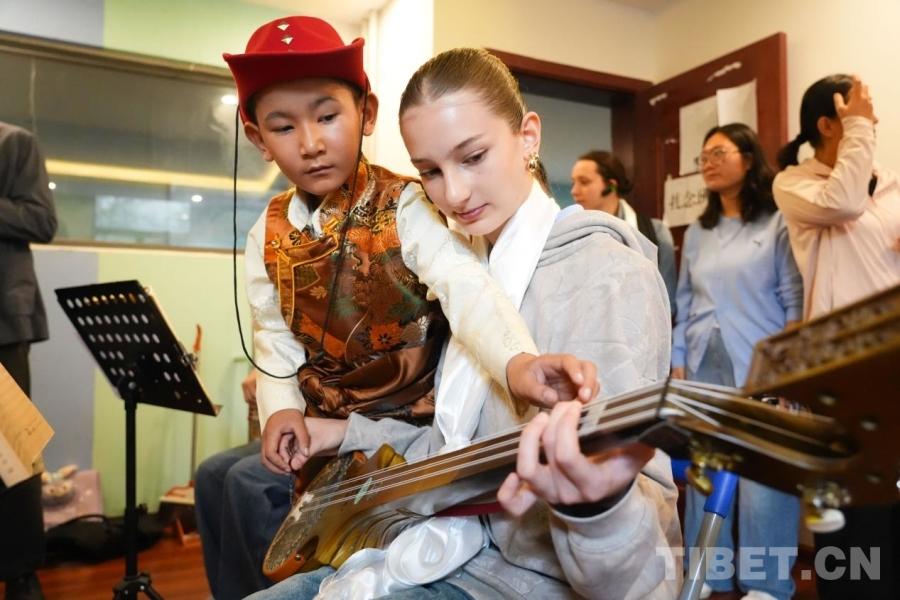
Leaving the exhibition hall and walking upstairs, the visitors heard melodious music coming from the second floor. In a dranyen interest class, a group of five- and six-year-old children were practicing the instrument. The dranyen is a traditional plucked string instrument from Xizang, known for its rich, resonant tone and powerful projection. “It’s a little like a guitar, but also very different. It’s really interesting,” said Catherine as she tried plucking the strings under the hands-on guidance of the children from Xizang, feeling the vibrations from the soundbox and its warm, rounded tone.
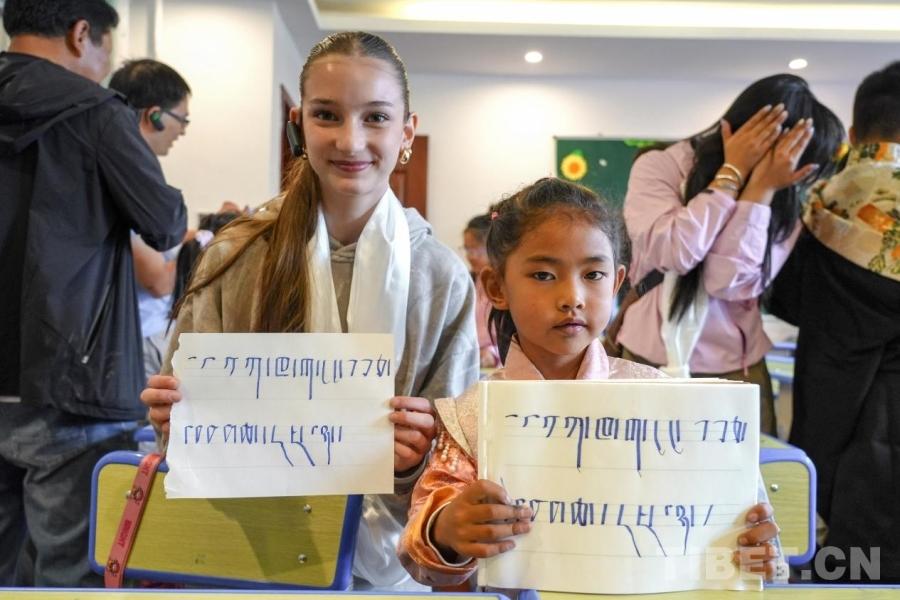
In the Tibetan calligraphy classroom, the American students picked up bamboo pens, dipped them in ink, and slowly traced the Tibetan script stroke by stroke under the guidance of their young “teachers.” Accustomed to writing in the Latin alphabet, they found the distinctive curves and structures of Tibetan script both unfamiliar and fascinating. “It’s really cool! They write so well. These classes really show how talented the children here are!” Chloe said excitedly.
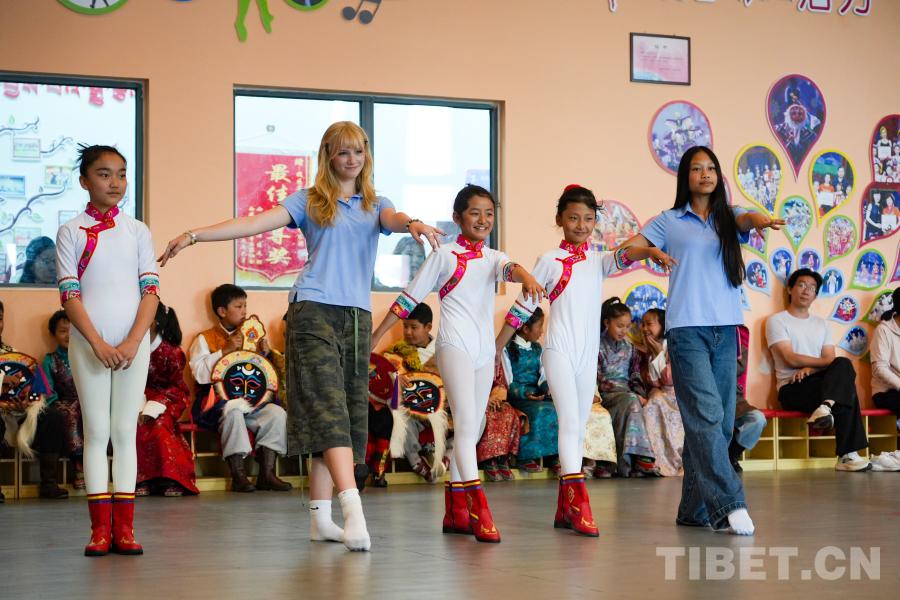
Dance is an expressive form of body language. The Snow Lotus Children’s Art Troupe of the Xizang Youth Palace performed an energetic Reba dance and Tibetan opera for the visiting delegation. Accompanied by tambourines and known for its vigorous movements, Reba dance was performed by troupe members in traditional costumes. As they spun and leaped, their swirling skirts brought to life the passion and boldness of the plateau. The rustic masks and long, resonant melodies of Tibetan opera, meanwhile, kept the American teachers and students riveted. The U.S. delegation then presented a rhythmic gymnastics performance of their own. Their graceful movements and dynamic physical expression drew repeated exclamations of admiration from the children of Xizang, “So beautiful!”
Making friends through dance and connecting heart to heart, immersive cultural exchanges and experiences allowed the American teenagers to appreciate the vitality of Xizang’s diverse ethnic cultures and to see a real, multifaceted and vibrant Xizang. “I really love the culture here. By learning about and understanding how people here live, I can feel how important culture is to them,” Samantha said, adding that she would share stories of this wonderful trip to Xizang with more friends after returning to the United States.
From August 14 to 19, a 22-member delegation of teachers and students from the Oregon Rhythmic Gymnastics & Dance Academy is visiting Xizang for cultural exchanges. During their visit, they will share the stage with performers from Xizang. They will also visit the Potala Palace, Jokhang Temple and Xizang University, among other places, joining local artists and young people in fostering friendship and cooperation between the people of China and the United States across the mountains and seas.
