


By October 25, nearly three days had passed since the magnitude-7.0 earthquake struck Baqen. The earthquake caused serious casualties and property losses among local residents. The safety of religious venues in the quake-hit area was also a matter of concern.
It is learned that no casualties or building collapses had been reported at religious venues in Baqen County as a result of the earthquake. Some buildings had sustained minor earthquake damage, but their safety conditions were still awaiting professional assessment. Following the earthquake, local monastery management committees promptly organized monks to move to safety, inspect for potential hazards and ensure that their basic living needs were met. Meanwhile, members of the religious community actively responded to the call, taking part in earthquake relief efforts, visiting and comforting affected residents, and providing psychological support. Through their actions, they brought warmth and strength to those in need.
Over the past three days, how have the monks at the monasteries been faring? Have regular religious activities been affected? And how are members of the religious community contributing to earthquake relief efforts? With these questions in mind, reporters visited Patsang Monastery, Lubu Monastery and Puna Monastery in Baqen County on October 24.
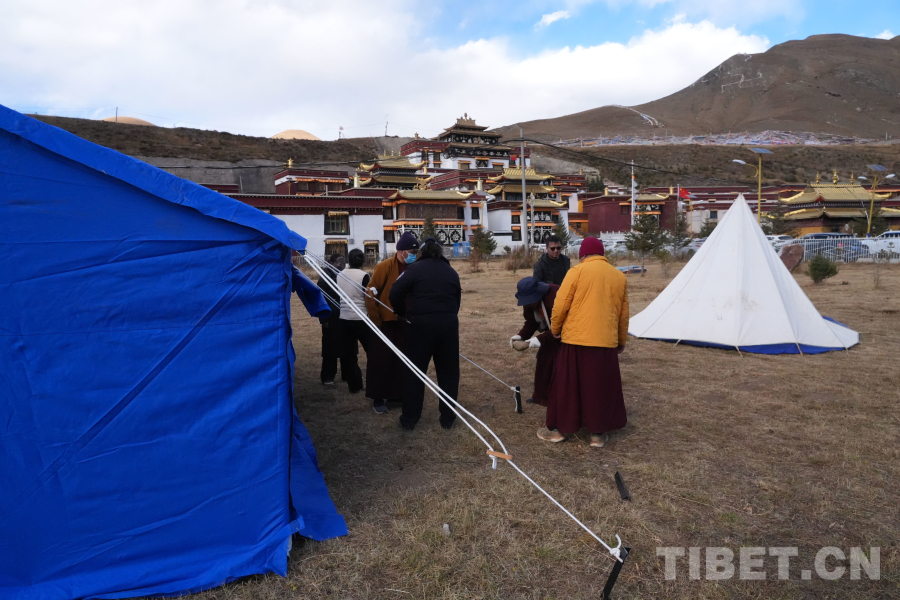
Monks and government staff work together to set up temporary resettlement tents in an open area at Patsang Monastery in Baqen County.
Patsang Monastery: Scripture study continues as normal and order gradually returns
On the afternoon of October 24, reporters visited Patsang Monastery, located about 58 kilometers in a straight line from the earthquake’s epicenter. Founded in 1847, the monastery has a history of more than 170 years. In 2013, Patsang Monastery was designated a cultural relic protection site at the autonomous-region level. In 2017, the government invested more than 10 million yuan in conservation and restoration work to protect the monastery. During the magnitude-7.0 earthquake, no buildings collapsed and no one was injured at the monastery. The main hall showed no obvious structural damage, although some monks’ quarters sustained minor damage, including peeling wall plaster. A professional assessment is still needed to determine the buildings’ safety.
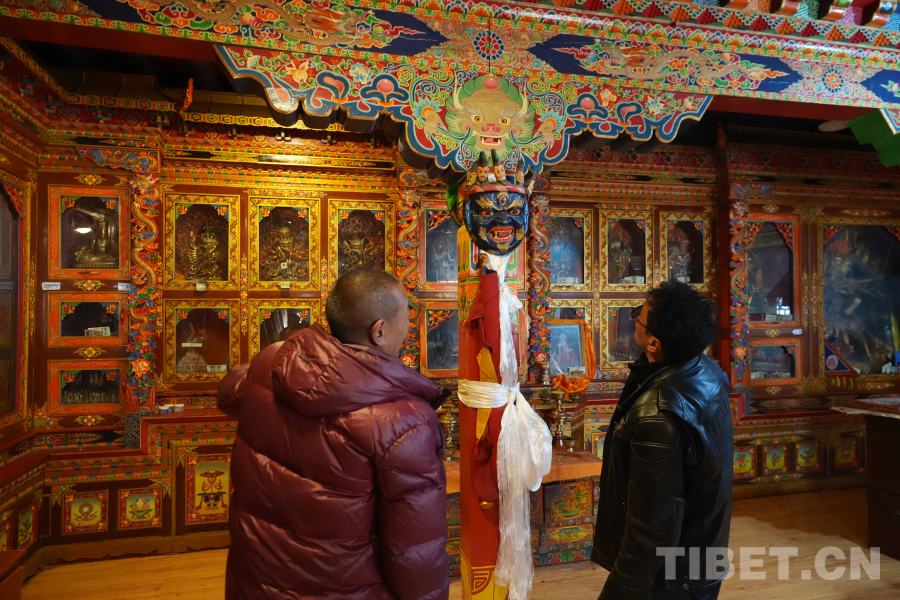
Monk Zhongsang Sopa describes the earthquake damage at the monastery.
“After the earthquake, we immediately organized the monks to move to a safe area in the courtyard. We checked everyone’s name one by one to ensure that everyone was safe, then inspected the halls and monks’ quarters one by one for potential safety hazards.” Liu Huilin, secretary of the monastery management committee, told reporters that the monks were being accommodated in an orderly manner. Temporary tents were being set up, and committee staff remained on duty around the clock to address the monks’ daily needs.
Inside the main hall, Kelzang Droma, a member of the monastery management committee, described the aftermath of the earthquake to reporters. When the earthquake struck, Buddhist scriptures had fallen from the bookshelves and scattered across the floor. Plaster had also peeled off the walls in some of the older monks’ quarters. After prompt cleanup and rearrangement, the interior of the main hall had largely been restored to its original state by October 23. In a corner of the monastery, Zhongsang Sopa, who is responsible for safeguarding cultural relics, continued to carry out his duties. “None of the cultural relics in the monastery were damaged. I continue to look after them as usual every day.”
What particularly impressed the reporters was that the monastery’s regular scripture study sessions had not been interrupted.
“After the earthquake, the monastery management committee immediately gathered us in the courtyard. I quickly called my family, and only after learning that everyone was safe did I feel reassured. Then we checked the monks’ quarters one by one to see whether any monks were still asleep,” recalled monk Xire Paqing. He said that the monks resumed their daily scripture study sessions at 8 a.m. the day after the earthquake. “For safety reasons, we simply moved the sessions from inside the main hall to an outdoor location.” The monastery is now preparing for a traditional religious ceremony scheduled to take place in a few days.
From accommodating the monks and inspecting buildings to safeguarding cultural relics and resuming scripture study, Patsang Monastery is gradually returning to its normal routine.
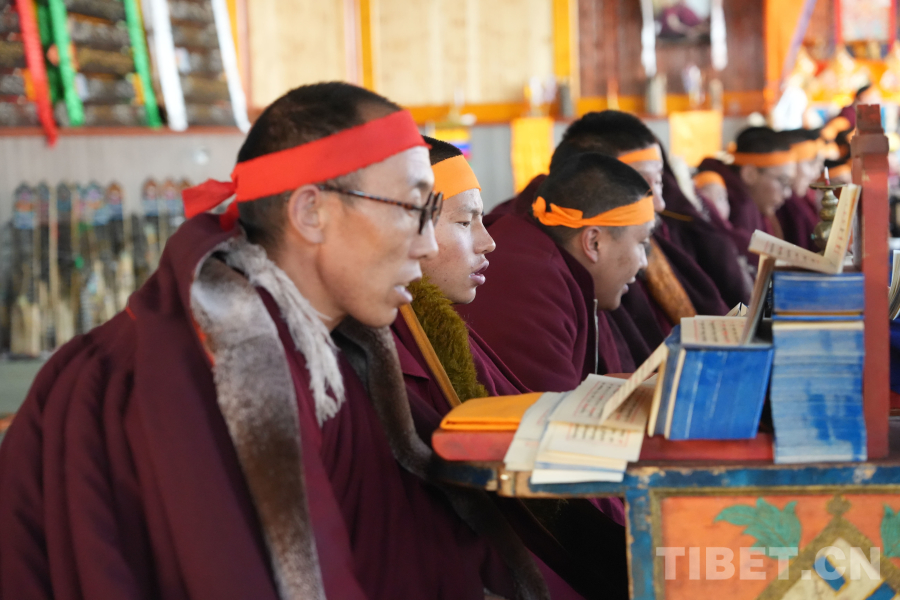
Monks at Patsang Monastery continue their scripture study as usual on October 24.
Lubu Monastery: Room-by-room safety checks and efforts to guide residents to safety
Leaving Patsang Monastery, reporters made their way to Lubu Monastery, about 34 kilometers in a straight line from the earthquake’s epicenter. By then, night had fallen. Lubu Monastery is the largest Bon monastery in Baqen County.
“The first thing we did after the earthquake was move all the monks to a safe area,” said Tashi, secretary of the monastery management committee. At the time, a monk was in retreat on a mountain near the monastery. The committee immediately sent staff to bring him to safety, ensuring that not a single monk was left behind. The government subsequently provided the monastery with 10 emergency relief tents, which were being set up in an orderly manner.
During the interview, Tashi showed reporters a thick ledger documenting earthquake safety inspections. Its pages contained detailed inspection records for each room, accompanied by photographs taken on site. Even hairline cracks and small patches of peeling wall plaster were carefully recorded and photographed by committee staff. “For this earthquake, we have opened a separate file for every room. We have also carefully documented problems that existed beforehand. We will wait for professional assessments to ensure the monks’ safety,” Tashi said. The fact that no buildings have collapsed does not mean there are no safety risks. The thick ledger documents the monastery management committee’s meticulous inspections and reflects its commitment to protecting people’s lives.
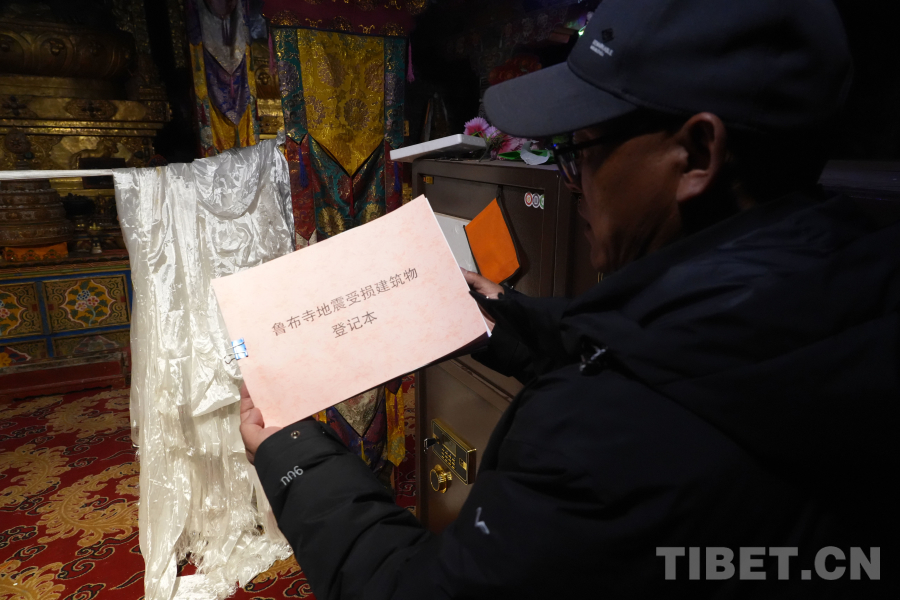
Tashi shows reporters the register documenting earthquake damage to buildings at Lubu Monastery.
While ensuring the monastery’s own safety, its monks have also taken an active part in earthquake relief efforts. Gasang Gyatso, the monastery’s disciplinarian, received the “Thorampa” degree, an advanced academic title in Tibetan Buddhism, from the High-level Tibetan Buddhism College of China as part of its 21st degree-conferral cohort. He told reporters that after the earthquake, the monks spontaneously performed religious rites for those who had died, in accordance with local traditions, to comfort their bereaved families.
In addition to providing religious services, the monks have actively raised public awareness of safety. “Some residents think they can continue living in their houses as long as the buildings have not collapsed. We tell them that a house that has not collapsed is not necessarily safe. They should follow the instructions of the government and professionals, move to safety promptly, and guard against aftershocks and secondary disasters,” Gasang Gyatso said. He added that religious figures should actively serve as a bridge to believers, conveying the care and concern of the Party and the government for people in the disaster-hit area. They should encourage residents to cooperate with earthquake relief efforts and strengthen their confidence in overcoming difficulties and rebuilding their homes.
As night fell over Lubu Monastery, safety inspections and temporary resettlement efforts continued. The meticulous records and repeated, patient efforts to persuade residents to move to safety reflect the sense of responsibility demonstrated by monastery administrators and religious figures in safeguarding people after the earthquake.
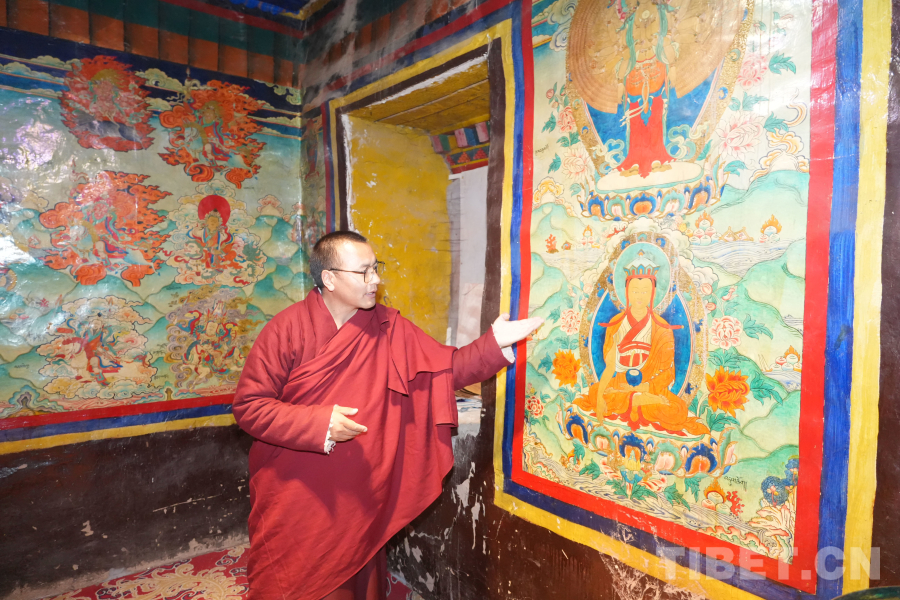
Gasang Gyatso briefs reporters on the situation at the monastery.
Puna Monastery: Taking part in earthquake relief and bringing comfort to affected residents
As night deepened, reporters arrived at the final stop of their visits that day — Puna Monastery. Located in Lalongda Village, Zase Town, Baqen County, the monastery was founded in 1864. It is about 62 kilometers from the county seat and approximately 34 kilometers from the earthquake’s epicenter in a straight line.
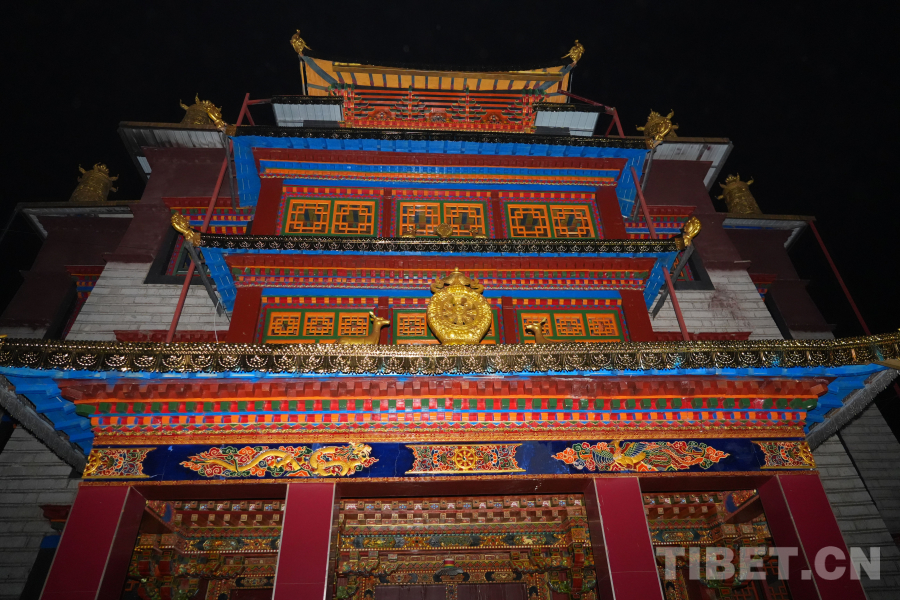
The main hall of Puna Monastery late at night. The main structure was unaffected by the earthquake.
“After the earthquake, we immediately evacuated everyone. A preliminary inspection found no collapsed buildings or casualties,” said Tenzin Dawa, secretary of the monastery management committee.
During the interview, reporters heard a moving story about a monk responsible for overseeing the monastery’s retreat facility. When the earthquake struck, the monk was in Nagqu, preparing to travel to Lhasa for medical treatment. After learning of the disaster, he immediately contacted government staff and said he wanted to return to Baqen at once.
“He said that the Party and the government were organizing rescue and relief efforts, and that religious figures should also play an active role, particularly in providing psychological support to people affected by the earthquake,” Tenzin Dawa explained. The monk returned to Baqen overnight and actively encouraged other monks to join efforts to visit affected residents and participate in disaster relief.
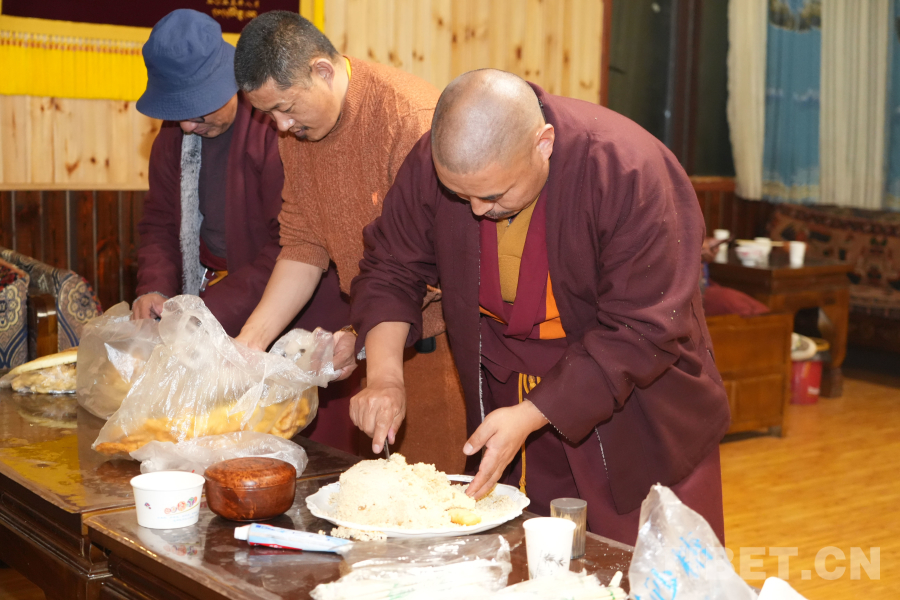
The dining hall at Puna Monastery remains orderly after the earthquake, with the monks’ daily needs adequately provided for.
Tenzin Cupei, a Buddhist scripture teacher at Puna Monastery, told reporters that after the earthquake, the local government and the monastery proactively contacted the families of those who had died to understand their needs. Respecting local customs, they provided religious services and spiritual comfort to families that needed them.
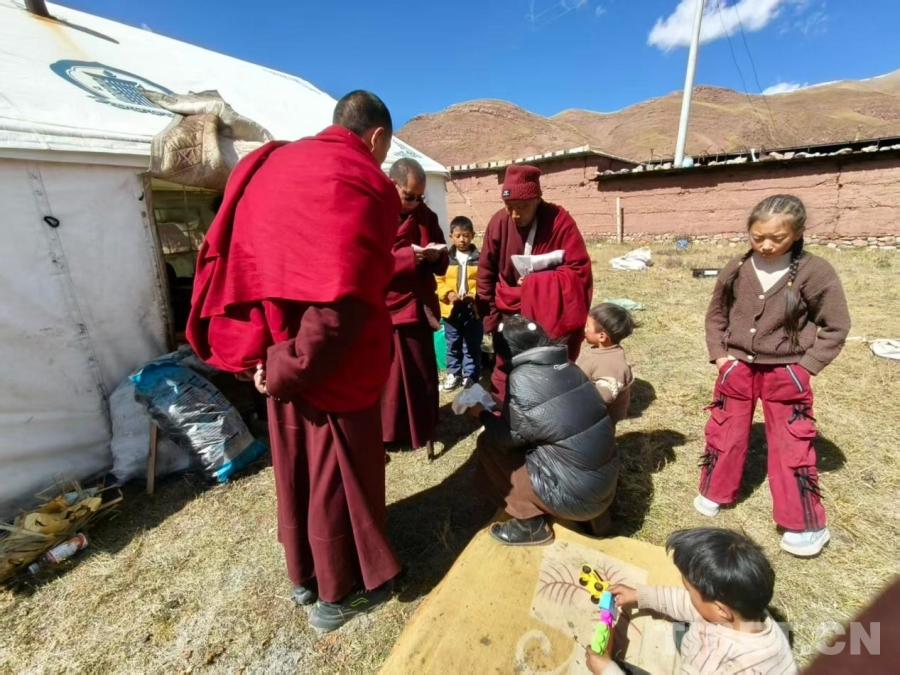
Working together on earthquake relief, protecting our home on the plateau
By the time the interviews concluded, it was late at night. Looking back on the day’s visits, three details stood out most to the reporters: scripture study at Patsang Monastery continued as usual at 8 a.m. each day; Lubu Monastery maintained a thick, detailed ledger of safety inspections; and monks at Puna Monastery provided religious services to people affected by the earthquake.
Following the earthquake, no buildings collapsed and no casualties were reported at religious venues in Baqen County. Monastery management staff promptly organized evacuations to safety, inspected buildings for potential hazards and ensured that the monks’ daily needs were met, while regular religious activities continued in an orderly manner. Meanwhile, members of the religious community actively participated in earthquake relief efforts. Drawing on their close ties with religious believers and their familiarity with local customs, they took the initiative to guide residents toward safety and provide spiritual comfort.
Editor:Bella Wu
